Every migration itinerary defaults to the Masai Mara. Few travelers stop to ask if the reserve is really the best place to see the drama. Maybe it is just the most marketed one. The Mara River, the crossings, and the wildebeest columns all exist on the Tanzania side too. That is the northern sector of Serengeti National Park. Touring Insights compares what each place actually offers. We use real distances, named camps, and current fee structures. Use the numbers below to decide if the Mara earns its spot on your route, or if Northern Serengeti does the job better.
What “Skipping the Mara” Actually Means
Skipping the Masai Mara does not mean skipping the Mara River or the crossings. It means basing your migration-season safari in Northern Serengeti instead. That area covers Kogatende and the Lamai Wedge, where the same river flows through Tanzanian land before it crosses into Kenya. Wildebeest do not recognize the border. Herds move back and forth across it from roughly July through October. A camp on the Tanzania side can put you on the riverbank for crossings. You never need to set foot in the Kenyan reserve.
Masai Mara vs Northern Serengeti: The Numbers
The two areas share an ecosystem but differ sharply in size, cost, and crowding. Here is how they compare on the details that actually shape a trip.
| Factor | Masai Mara National Reserve | Northern Serengeti (Kogatende/Lamai) |
|---|---|---|
| Protected area size | approx. 1,510 km2 | part of Serengeti National Park, approx. 14,750 km2 total |
| Peak-season entry fee (non-resident, indicative) | USD 200-250 per person/day, Narok County side | USD 70-90 per person/24 hrs, TANAPA park fee |
| Lower-cost alternative gate | Mara Triangle (Mara Conservancy side), indicative USD 100-120 | none needed, single park fee applies park-wide |
| Nearest airstrips | Keekorok, Musiara, Ol Kiombo | Kogatende, Lamai |
| Drive from nearest city | approx. 270 km / 5-6 hrs from Nairobi | approx. 320-360 km / 7-8 hrs from Arusha |
| Flight time from nearest hub | approx. 45 min from Nairobi Wilson Airport | approx. 1-1.5 hrs from Arusha or Kilimanjaro |
| Vehicle density at crossing points | High, especially July-August | Lower, fewer lodges hold permits in this sector |
Fees on both sides shift often. Confirm current rates with Kenya Wildlife Service, Narok County, the Mara Conservancy, or TANAPA before booking. Treat the numbers above as indicative ranges, not fixed prices.
Why the Same River Runs Through Both Parks
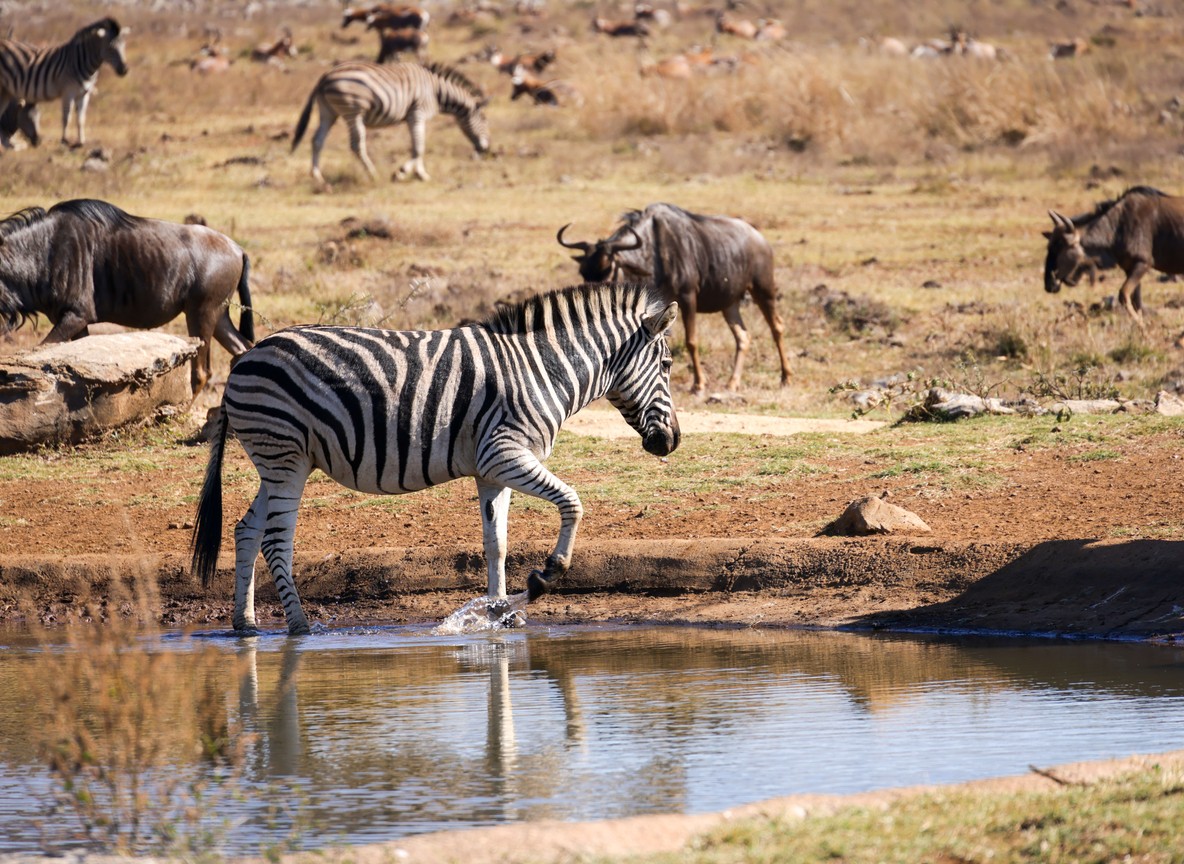
The Mara River rises in Kenya’s Mau Forest. It flows south into Tanzania, then loops back north through the Masai Mara toward Lake Victoria. Wildebeest follow grass, not maps. The same herds that cross into Kenya in July often re-cross south into Northern Serengeti by September or October, as rains shift. That means the crossing footage travelers associate with the Mara happens on the Serengeti side just as often. Sometimes it is the same crossing point, like Kogatende itself, just filmed from the opposite bank.
The Border Crossing Myth
A common assumption trips up first-time planners. They think a safari can simply drive from the Masai Mara into Serengeti National Park, following the wildebeest across the border in one loop. It cannot. There is no immigration post or open road crossing for tourist vehicles between the two, even though they share one ecosystem. Travelers who want both sides need to fly out through Nairobi, then into Arusha or Kilimanjaro. That adds a full day and an extra flight cost to any combined itinerary. This is exactly why one base, not two, saves real time and money on a shorter trip.
Where to Base Yourself in Northern Serengeti
Camps here sit closer to the river than most Mara properties sit to their busiest crossing points. Fewer lodges hold permits in this sector, which keeps it quieter. Sayari Camp and Lamai Serengeti both sit inside the Lamai Wedge. That is a strip of land between the Mara River and the Kenyan border. It stays open only part of the year, since river levels can cut it off. Klein’s Camp sits further south near Lobo and stays open year-round, with a shorter drive to crossing points in peak months. Camps in this sector transfer guests through Klein’s Gate, Ikoma Gate, or Bologonja Gate, depending on location.
| Camp | Location | Best access point |
|---|---|---|
| Sayari Camp | Lamai Wedge, on the Mara River | Kogatende Airstrip |
| Lamai Serengeti | Lamai Wedge, north bank | Kogatende Airstrip |
| Klein’s Camp | Lobo area, southeast of Kogatende | Lamai Airstrip or road via Klein’s Gate |
When to Go: Matching Dates to the Herds
Timing decides more than location does. Herds typically move into the Mara River area, on both banks, from July through October. The heaviest crossing activity falls in August and September. By late October, most herds drift south again. Short rains push them back through central and southern Serengeti toward the Ndutu area for the December calving season. A Northern Serengeti base only pays off within that same July-to-October window. Outside those months, the herds are elsewhere. Neither side of the river offers migration viewing then.
Cost and Crowd Comparison: What You Actually Save
Beyond the headline fee gap, the bigger saving is often space. Mara crossing points during peak weeks regularly draw dozens of vehicles per sighting. Repeat visitors complain about this often. Northern Serengeti’s permit system limits how many camps operate in the Kogatende and Lamai sector. That caps the number of vehicles at any one crossing. Fewer lodges also means fewer early wake-up calls competing for the same riverbank spot. Travelers who want space and a lower daily fee tend to prefer Northern Serengeti. Those who want the widest choice of camps and the shortest flight from Nairobi still lean toward the Mara.
Explorer Notes
Pack for dust and heat, even in the rainy shoulder months. The Lamai Wedge floods at times. Some camps close for weeks when river levels rise. Confirm exact operating dates with the camp itself, not a general calendar. Bring binoculars, not just a long lens. Crossing points in Northern Serengeti often sit across the river, not right beside the track. Ask your camp about crocodile numbers at the specific crossing point before a game drive. Levels vary year to year with water flow. If you only have five or six days, pick one side of the river and commit to it. Splitting a short trip between the Mara and Northern Serengeti usually eats a full travel day on the Nairobi-Arusha flight connection. That cuts real game-viewing time.
What to Read Next
- Comparing the two migration bases in more depth? See the Masai Mara vs Northern Serengeti fee table above.
- Planning the calving season leg instead? Look up Ndutu and southern Serengeti timing for December through March.
- Building a combined Kenya-Tanzania itinerary? Ask a partner operator about flight connections through Nairobi and Arusha before locking in dates.
FAQ
Can I drive directly from the Masai Mara into Northern Serengeti? No. There is no open tourist road crossing or immigration post between the two. Combined itineraries fly through Nairobi and Arusha or Kilimanjaro instead, adding a travel day.
Is Northern Serengeti cheaper than the Masai Mara? Generally yes. Serengeti’s park-wide fee runs at an indicative USD 70-90 per person per day. The Narok County side of the Mara runs at an indicative USD 200-250 in peak season. Confirm current rates before booking, since both shift often.
When is the best time to see river crossings in Northern Serengeti? Roughly July through October, with August and September typically the busiest crossing months at Kogatende and the Lamai Wedge.
Which airstrip serves Northern Serengeti camps? Kogatende Airstrip serves most camps in the Lamai Wedge and Kogatende area. Lamai Airstrip and Klein’s Gate serve camps further southeast near Lobo.
Does the Mara River only cross the Masai Mara? No. It flows through both Northern Serengeti and the Masai Mara. Wildebeest cross it on both sides, depending on rainfall and grass.
Northern Serengeti will not suit every itinerary, especially a short trip built around a quick Nairobi flight. But if you have time to fly into Arusha or Kilimanjaro instead, it offers the same river, fewer vehicles, and a lower daily fee. Check the Tour Packages page for itineraries built around the Kogatende and Lamai sector. Or ask a partner operator to confirm current camp availability for the July-to-October crossing window.